Family Life in the U.s During the First World War
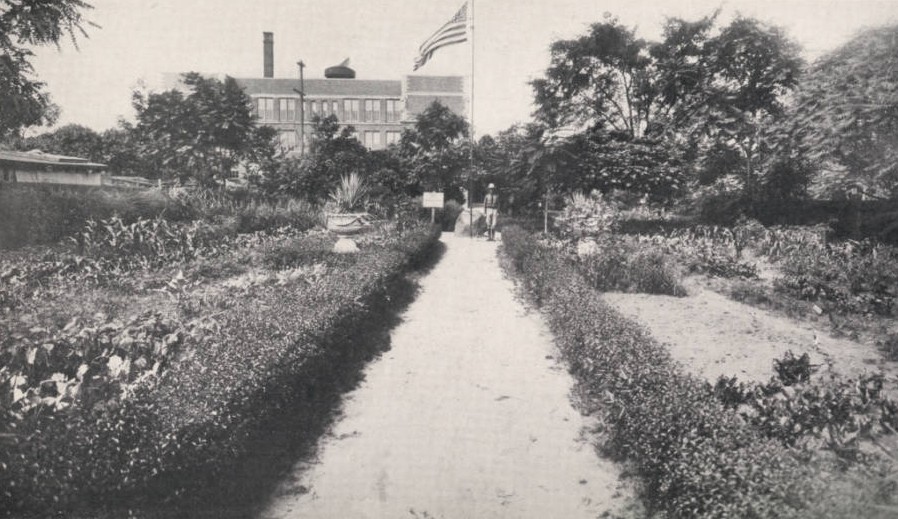
For American children in World War I, life on a home forepart far from boxing did not mean life lived far from the effects of state of war. Citizens of every age and ability were called upon to assistance in the war effort, and children were no exception. From gardening to raising funds to sacrificing at dwelling, American kids answered the call, making a pregnant contribution to their country and demonstrating considerable patriotism and self-sacrifice.
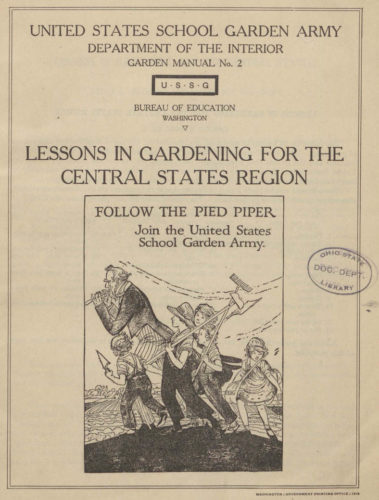
In America, "19th century views on the benefits of fresh air, physical exertion, and graphic symbol building, also every bit the bones educational aspects of nature study… ignited the school garden movement." However, with the advent of war, gardening became a patriotic activeness. Citizens were urged to use all available land, including schoolhouse grounds, to grow produce that could gainsay food shortages at home and abroad. The Agency of Pedagogy created the U.S. Schoolhouse Garden Army (USSGA), enlisting children to be "soldiers of the soil" and utilizing the motto "a garden for every child, every child in a garden" to encourage participation.
They supported gardening and food preservation efforts by publishing pamphlets which included lessons on cultivating a variety of produce, building cold frames for growing in lower temperatures, and recipes for canning and drying foods. The USSGA logo featured the Pied Piper, who plays a flute while children carrying garden tools happily follow behind him, prepare to do their part for America.
Youth organizations responded to the phone call for help through volunteerism and fundraising. Girl Scouts volunteered every bit ambulance drivers for the Red Cantankerous, knit scarves and other items for soldiers, and sold war bonds, as did the Boy Scouts and the Junior Cherry Cross, which was established in response to the state of war. Contributions by youth organizations were quite remarkable: upon the request of President Woodrow Wilson, the Boy Scouts harvested 109,250 black walnut trees, which were used for propellers and gun stocks, and planted three more trees for each 1 cut downwardly. Meanwhile, the Inferior Red Cross raised over $three.6 million over the form of the war.
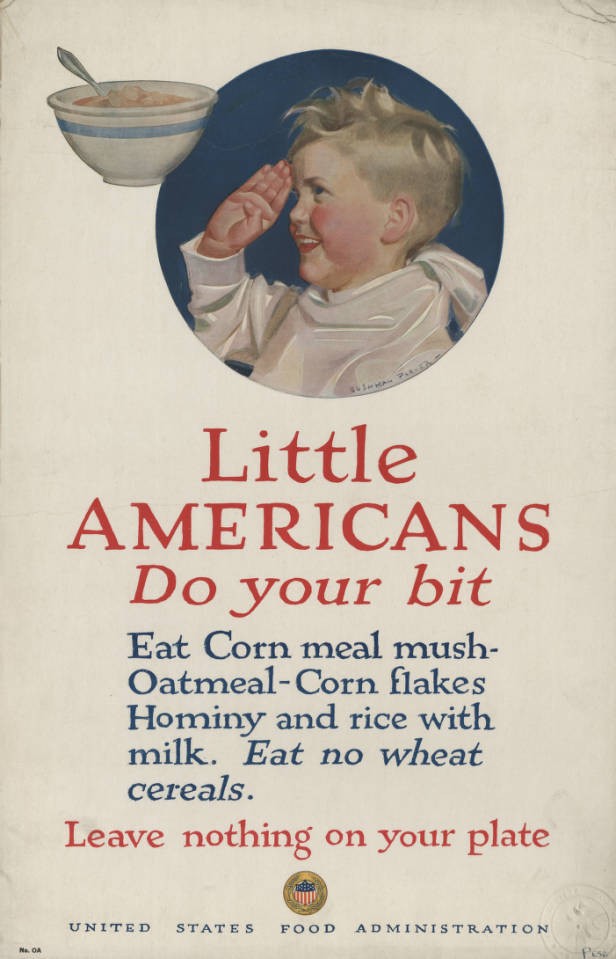
Didactics of children in America changed substantially during the war. Woodrow Wilson's administration published a series of print materials focusing on nationalism and patriotism, such as the previously-mentioned materials for the USSGA, and likewise promoting anti-German sentiment. Curriculum was adapted to reflect our alliance with Great United kingdom, with textbooks being re-written to downplay friction betwixt Great Britain and the American colonies. In an effort to promote unification across the country, education was nationalized, keeping curricula consistent beyond states.
Children's activities were not limited to the school yard or youth organizations, either. With male breadwinners fighting in, or dying every bit a result of, the state of war, women institute themselves working for wages to support their families or to fill holes left by absent men. For women, these activities contributed to increased rights, such equally suffrage. For children, however, this meant a modify to the family dynamic that resulted in less time spent with parents and an expectation that they would assistance at home, filling roles previously held by adults. It besides meant lessons in thrift, and considerable sacrifice, that children may not have been exposed to otherwise. This, along with the government's telephone call for children to assistance with the war effort, meant, quite only, that children were forced to grow up speedily.
American participation in World War I was relatively brief; we declared war in April of 1917 and fought for 19 months, when Armistice ended the state of war on November 11, 1918. American cede, withal, was substantial and life-changing for families. 16,516 Americans were killed, either in boxing or by illness; 320,000 were either injured or sickened; endless women, including mothers acting as unmarried parents in their husbands' absences, were called upon to fill roles previously held by men. As a consequence, the state of war was life-irresolute for hundreds of thousands of children throughout the country.
In Mr. Britling Sees Information technology Through (available externally in full-text from Project Gutenberg), H.One thousand. Wells wrote of the war that "this is the terminate and the beginning of an age." For American children growing up during World War I, no truer words take been spoken.
Cheers to Shannon Kupfer, Digital Initiatives Librarian at theState Library of Ohio, for this calendar week'due south post!
Notation: Guidelines for canning fruits and vegetables have been revised since the publication of the pamphlets linked in this post. For updated information and current condom guidelines, please visit the U.Due south. Department of Agronomics'due south Complete Guide to Habitation Canning: https://nchfp.uga.edu/publications/publications_usda.html.
brewsterhatte1962.blogspot.com
Source: https://ohiomemory.ohiohistory.org/archives/3871
0 Response to "Family Life in the U.s During the First World War"
Post a Comment