Best eats: Our top picks for ‘ugly delicious’ Chinese and Indian rojak in Singapore
Of all the dishes in the world that tin can be classified every bit "ugly delicious", rojak comes pretty close to the acme of the list.
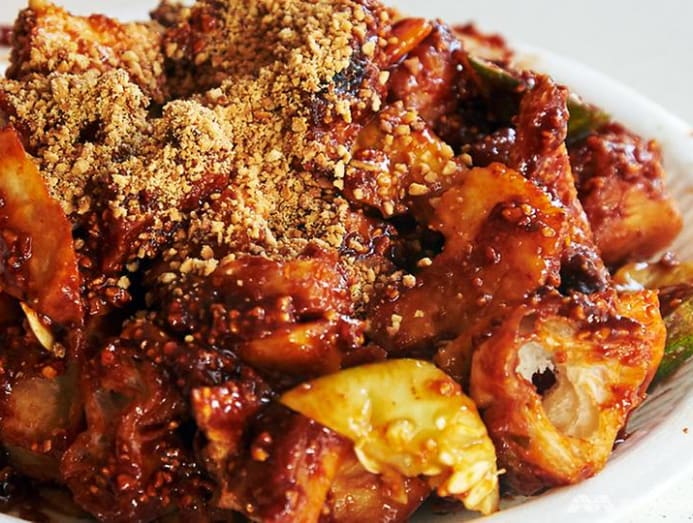
In Singapore, Chinese rojak consists of cut fruit, vegetables and fried dough sticks obfuscated past a sticky dark sauce dusted with crushed peanuts.
Malay rojak usually has the addition of tempeh (fermented soybean cakes) and tauhu goreng (fried business firm tofu).
Indian rojak is best described equally a deep-fried smorgasbord of ingredients, from prawn fritters to potatoes, dressed or dipped in a spicy-sugariness sauce.
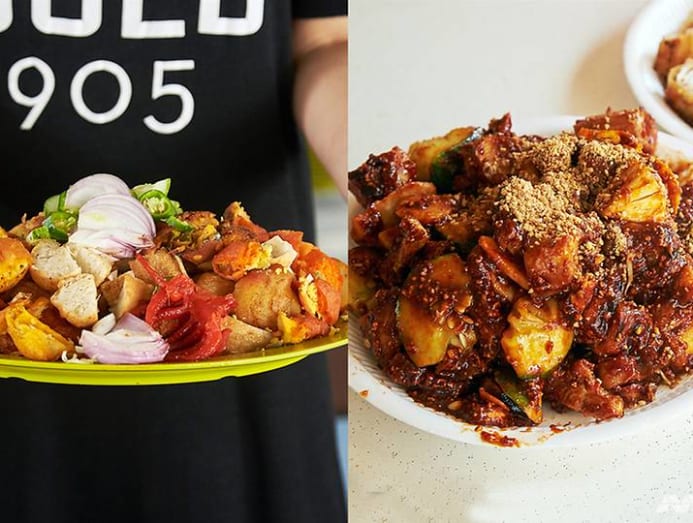
Rojak, in all its diverse forms, may not exist the most visually appealing of dishes, but looks aren't everything when gustatory modality and texture more than make up for it. Maybe more importantly, rojak has also gone beyond the menu to mean something greater.
Symbolically, rojak reflects the Singaporean culture and identity – a fiddling scrap of everything thrown together with a pleasing upshot. In colloquial Malay, rojak also means "mixed".
READ: Best eats: Our Hokkien mee picks in Singapore – with crunchy lard, peppery sambal
No wonder then, that Gilded 905 listeners voted the dish as one of the acme five local eats that best represents Singapore. Of all the recommendations we received, these two rojak stalls in the West prevailed – one serving Chinese style and the other serving Indian fashion.
BROTHERS ROJAK (CHINESE ROJAK)
The duo behind this relentlessly busy Clementi stall really are brothers, and the balancing human action driving a family business organization that has spanned more than half dozen decades, 3 of which at its current location.
Tan Boon Hwa and Tan Boon Heng are possibly the two near jovial hawkers I've always had the pleasure of meeting, with the younger Tan sibling (on rojak-making duty at the time of my visit) calling out to each customer with a smile and a "Howdy, lao ban" (boss in Mandarin).
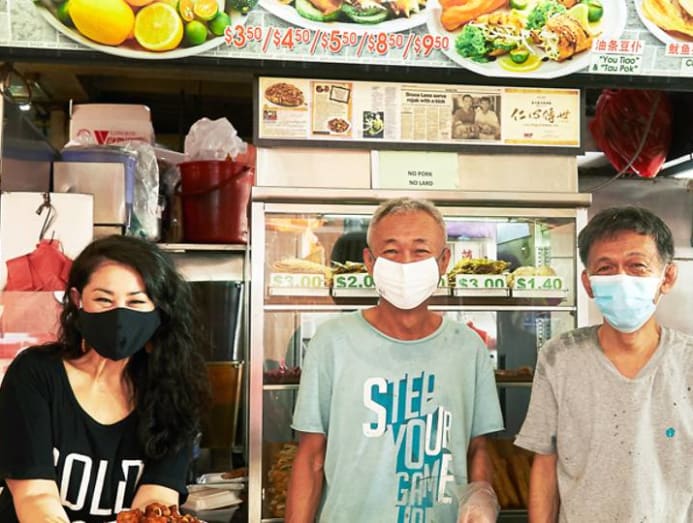
When I pointed out I should be the one addressing him as boss, Boon Heng said humbly in Standard mandarin as he prepared my club: "Actually, we're just apprentices, however trying. Our father taught the states how to make rojak. He was the true master."
Even so, their own mastery over the arts and crafts was evident. They managed to proceed up barrack with the steady stream of customers (fifty-fifty at 3pm), without breaking their smiles or their rojak-making pace.
The line moved chop-chop, with the brothers working compatibly cheek-by-jowl within the confines of their tiny infinite, shared with a kueh tutu stall and a popiah stall.
Nothing seemed to faze the Tan brothers, non the long queue or my finicky ordering – two plates for dine-in, ii packets to takeaway – one without sugar, one with more chilli and extra ingredients. Surely a test of their patience, simply they passed with flight colours. Thumbs upward for their service, but would their rojak match up?
In a word, yep. Especially if you prefer a gentler rojak. Allow me explain.
The very antonym of subtle, rojak is a love it or hate it dish. In my mind, information technology tends to launch a punchy assault on the senses, a full-on mix of sweet fruit clashing with the savoury funk of pungent prawn paste, spicy notes combating with fume from a charcoal grill.
Merely at Brothers Rojak, they have managed to mellow that battle into a well-rounded, beautifully balanced dish, with all of the familiar flavours, but none of the jagged edges. Nothing really jarred or competed for attending on the palate.
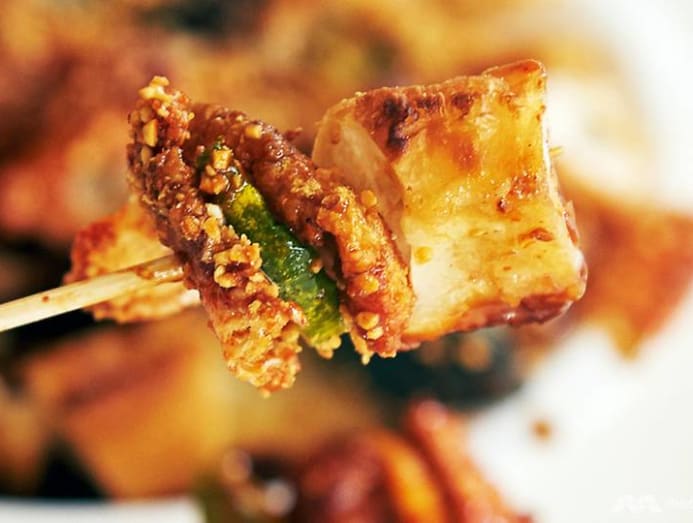
For a standard plate of rojak (prices range from S$iii.l to S$9.50, I ordered a S$5.50 portion), I got a heaped serving of thinly-sliced blindside kuang (jicama), pineapple, cucumber, scissor-snipped torch ginger flower and you tiao (fried dough cruller), all tossed in a sticky concoction of hei ko (prawn paste), chilli sauce, assam (tamarind) and sugar. The oozy mound was then sprinkled liberally with crushed peanuts.
Function of the fun was watching the Tan brothers prepare the dish. They took turns, like DJs spinning and grooving at a silent disco, each with their own style and rhythm, spooning ingredients from an array of bowls arranged effectually their large central basin, in which everything was mixed vigorously.
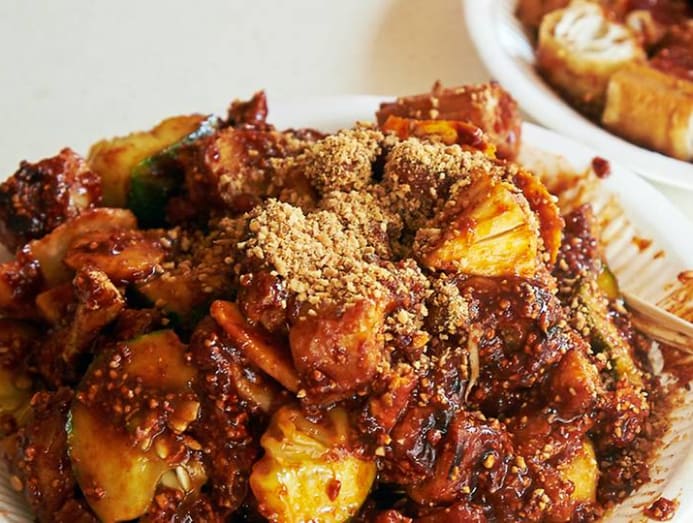
The joy of eating Brothers Rojak came from the harmonious mingling of flavours and textures. Equally expected of a fruit salad, in that location was the refreshing burst of crunchy cucumber, sweet and tart pineapple and the earthy jicama.
READ: All-time eats: The birthplace of Singapore's chilli crab and a mod burger version
That juicy freshness was chased by the toasty peanuts, charred you tiao with crispy edges and the briny caramelised flavour of prawn paste. The sour zing of tamarind and gentle hint of chilli rounded the dish off beautifully. The glorious marriage of flavor profiles, that didn't fight or overwhelm, played nearly approvingly on the palate.
Skillful as is, I highly recommend the menu extras to really enhance your standard rojak experience. I added pressed sheets of cuttlefish, taupok pau (fried beancurd stuffed with cucumber and bean sprouts), more than you tiao, as well as century egg with pickled ginger on the side. These came on a separate plate, tossed in the same moreish rojak sauce and garnished with more crushed peanuts.
The taupok pau, you tiao and cuttlefish all had a good sear from the grill and came away pleasingly striped with char marks, which added a farther smoky toastiness and warmth. The crispy corners of the deep fried y'all tiao and stale edible bean curd gave the saucy rojak much-needed textural contrast to the beansprouts and cucumbers in the taupok pau.
I too appreciated how the grilled cuttlefish echoed the savoury-sweet season of the prawn paste, its salty taste of the sea developing more and more as I chewed.
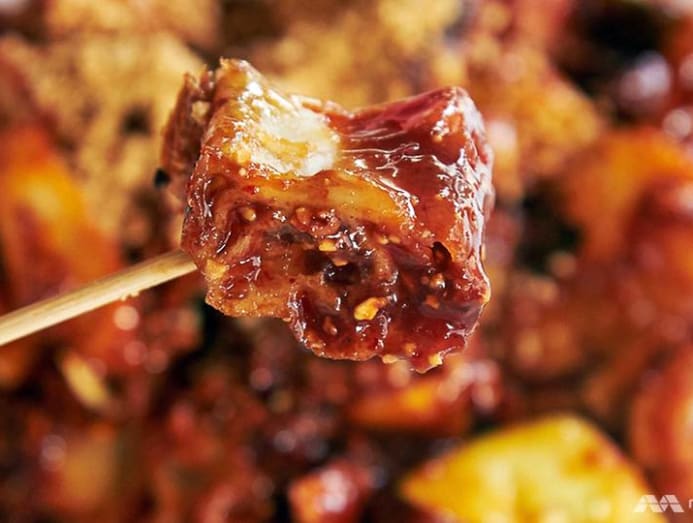
Yet, it was the century egg that actually elevated the rojak. Its super-charged green-grey yolk added a luxurious creaminess and unique earthy-ammonia whiff to the dish. Meanwhile, its gelatinous soy-brown albumen teased with its jiggly coolness.
Eaten with the pickled ginger, each mouthful of rojak had a bonus sweet, spicy and floral bite, which made up for what I felt was a smidge defective in the torch ginger blossom. I had seen information technology being added into the mixing bowl, but the fragrance and flavor seemed to have dissipated into the milieu.
Interestingly (though not unwelcome), their prawn paste was more understated than others I have encountered, with but a small-scale waft of pungency. It didn't reek of fermented shrimp, simply had an almost yeasty, Bovril-esque quality, which was by no ways unpleasant.
Perhaps therein lies its popularity. Brothers Rojak isn't overpowering or olfactorily offensive. Mild, with a adept balance of fresh, chewy, crispy and juicy textures, every bit well as sweet, salty, sour and spicy flavours, it definitely had mass appeal. Just as highly-seasoned was the uplifting, happy vibe the brothers exuded, which fabricated this rojak experience all the more gratifying.
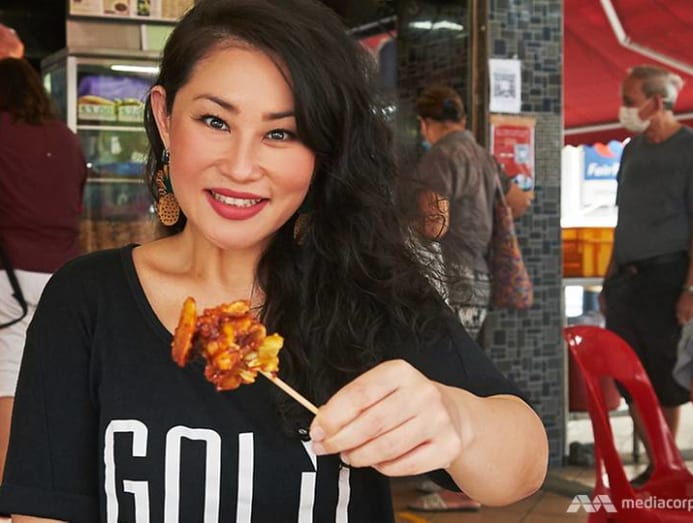
As I left, takeaway packets in tow, the brothers flashed their toothy grins and Boon Heng called out, "We're happy if you're happy! Come up back and back up usa! Thank you, lao ban!"
With a farewell like that, how can one refuse?
Located at 449 Clementi Ave iii, #01-211, Singapore 120449 . Open from 10am to 9.30pm, Mondays to Saturdays (airtight on Sundays). For pre-guild and pick-up, telephone call 9710 2700.
ABDHUS SALAM ROJAK (INDIAN ROJAK)
It's also all in the family at this Indian rojak stall, which has become quite the household proper name at Ayer Rajah Food Centre.
Started in the 1960s by Akber Ali, his legacy continues under the management of the stall's namesake. Formally trained as an electrical engineer, Abdhus Salam is the son of the tardily Mr Akber. After a stint in the corporate globe, he decided to fulfil his begetter'southward dream and stepped in to take charge of the business he'd been helping out at since he was xvi.
Abdhus has been preserving and improving on his culinary heritage since 1994 and even kick started his Indian rojak empire with an extension called Ministry of Rojak at Northpoint City.
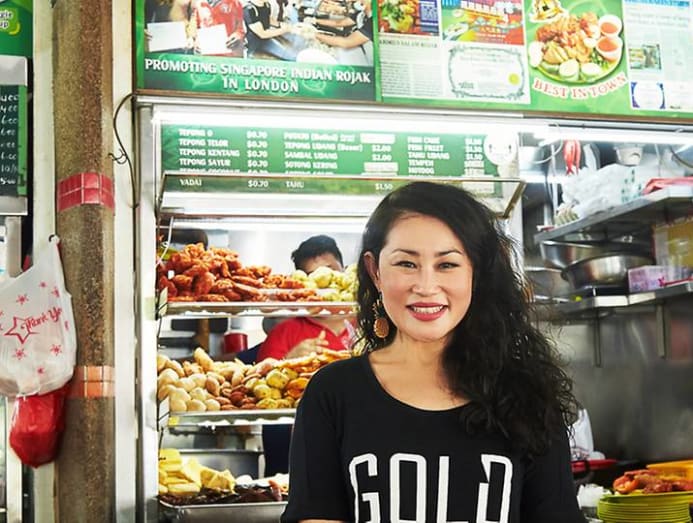
But because I'd been promised that this would be a dissimilar and outstanding Indian rojak experience, I was eager to pay a visit to the original stall that started it all.
The kickoff matter I noticed on arrival was the listen-boggling array of deep fried things on display. Dilapidated, golden-brownish and stacked high in tightly packed piles, they beckoned. Relieved I'd come up armed with a very empty stomach, I grabbed a large plate, tongs and picked 1 of everything. Yes, all xix items.
READ: Best eats: Our top 3 picks for a bowl of luscious, lemak laksa in Singapore
Everything was sizzled in a behemothic wok of hot oil, then chopped into seize with teeth-sized pieces and arranged similar a mini mountain, its patchwork of browns and oranges just broken upwardly past the dark-green of fresh chillies, cucumber and the purple of raw onions. These garnishes were a wise addition, but to freshen everything upwards and cut through all the oil and sugar.
Ii tubs of warm, thick, syrupy sauce accompanied the platter of deep fried wonders. Their hot oil bath had revitalised their crispiness then what I had was twice-fried goodies, double-dipped in hot fatty for double the flavor. Thankfully, at that place were none of the tell-tale signs of re-used oil. Everything smelt freshly fried, without being over-saturated by grease.
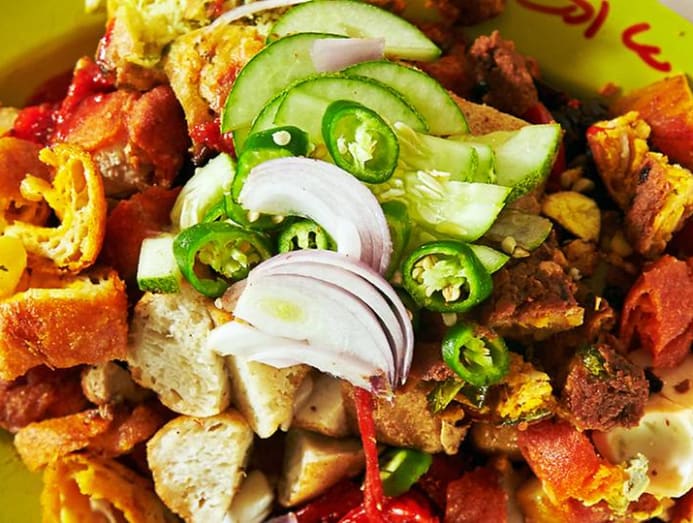
Non actually knowing what I had picked, I reached out to the extremely friendly and obliging staff. Both cook and server talked me through exactly what was on my plate.
These were – brace yourselves – crispy prawn fritter, big prawn fritter, two-in-one tofu and prawn fritter, vegetable flour fritter, evidently flour fritter, egg flour fritter (battered difficult-boiled egg), potato flour fritter (battered boiled spud), coconut fritter, battered tempeh, lentil fritters (dhal vadai), hotdog sausage, hard-boiled egg, fried house tofu, fried fish cake, breaded fish fillet, boiled potatoes, fried beefiness lung (paru), cuttlefish and squid.
Each menu item ranged from South$0.70 (for a vegetable dough fritter) to Southward$2 (for a hotdog sausage), which took my full pecker to Southward$27. A bit of a shock, until I remembered I had ordered everything on their carte and the serving was huge enough to satisfy at to the lowest degree five ravenous eaters.
Of all the ingredients balanced precariously on my platter, their selection of prawn vadai stood out. My favourite was the crispy prawn fritter – a cluster of little prawns dipped in a bright orange batter and deep-fried. This was an absolute flavour bomb - deeply umami, with crisis after crunch of batter and small, merely whole prawns giving off maximum brininess.
The regular prawn vadai didn't disappoint either, boasting ii big, naturally sweet, beat out-on prawns on bouncy fried dough.
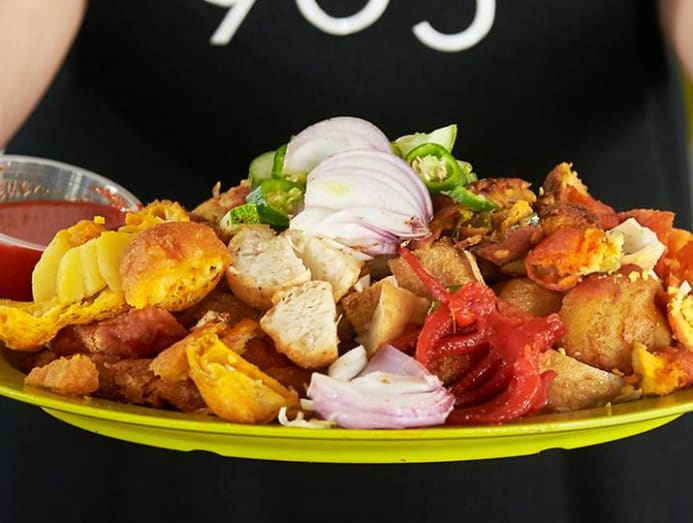
Texturally, the lentil fritter was a winner that featured densely packed lentil paste within a mealy, super-crunchy outside that was really well-seasoned and full of fragrant spices and back-scratch foliage.
The coconut fritter was also a unique savoury-sweetness discovery. These deep-fried pointy-ended cylinders of grated coconut had a lovely crisp outside and a fluffy, spongy interior that tasted very fresh, with a hint of sweet coconutty creaminess.
I also enjoyed the contrast of the chewy and crunchy boiled cuttlefish, whose psychedelic orange color belied its clean, natural gustation. Munching on the moist morsels of mollusc provided a welcome respite from all the crispy fried tidbits.
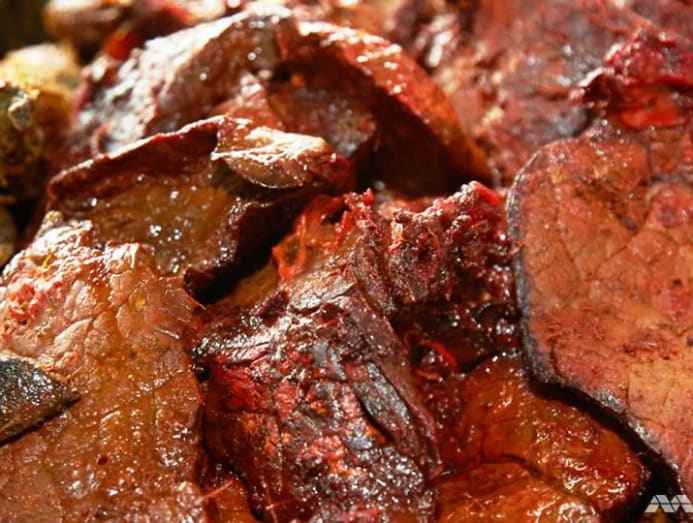
And finally, a firm favorite, albeit acquired taste, was the beefiness lung. Thick slices of the organ were heavily spiced and seasoned, red chilli paste nonetheless clinging to its charred surfaces, giving a existent hitting of oral fissure-watering, compact flavour along with springy chew, without an overt taste of offal.
What I enjoyed near about the entire dish was the surprise of finding something briny similar the prawns, or salty like the paru. Those flavours just popped, lifting an otherwise quite sweet and fatty dish.
Crunching through a deep-fried chaff to discover what it was hiding underneath became a bit of a game. Would it exist the firmness mildness of tofu or the waxy creaminess of a spud or the fluffiness of a fried dough fritter? Each forkful was the equivalent of a culinary lucky dip and dip I did, over and over, from platter into those tubs of sauce.
READ: All-time eats: Our elevation 3 picks for the most delicious chicken rice in town
From my observations, there were two kinds of Indian rojak eaters – dippers and slatherers. I savage firmly in the latter category, equally I preferred some control over how much of that neon orange, sweet and spicy sauce would glaze my ingredients.
Personally, I would accept liked information technology to be saltier and spicier, but the sweetness seemed to be a real highlight for customers, seen blanketing their platters with the sticky, glossy gravy.
The chatty cook was happy to let me in on a few ingredients that go into their signature Indian rojak sauce, only stopped brusque of giving away trade secrets. A alloy of sweet potato, peanuts, chillies and sesame seeds, the roasty nuttiness of the sauce came across in both fragrance and flavour.
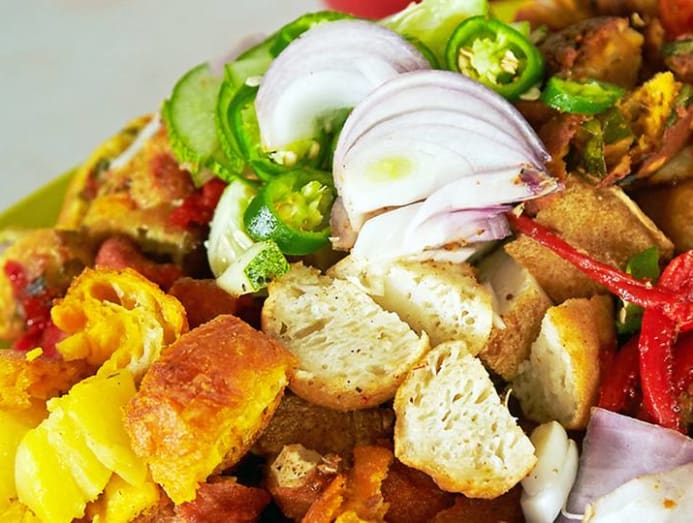
Overall, Abdhus Salam Indian rojak was very exciting for the whole palate considering of those contrasting tastes and textures. An extragavanza of fat, carbs and sugar that delivered ultimate condolement and indulgence, this was a dish that encourages glorious gluttony, especially if you're indecisive, hungry, or want to share.
I encourage all of the to a higher place, then become with your family unit or friends (call back, no more than than 5 people!) and share the calories. You'll get friendly service from the youthful, energetic staff and yous'll be spoilt for choice by the sheer multifariousness of delicious ingredients.
Located at 503 Due west Coast Drive, Ayer Rajah Food Centre, #01-73, Singapore 120503. Open from 11am to 9.30pm Sundays to Fridays, 12 apex to 9.30pm Saturdays. Bachelor on Grabfood, Foodpanda, Bungkus apps for delivery.
Catch Makan Kakis with Denise Tan every Thursday from 11am on Gold 905.
brewsterhatte1962.blogspot.com
Source: https://cnalifestyle.channelnewsasia.com/dining/best-local-food-singapore-rojak-chinese-indian-259026
0 Response to "Best eats: Our top picks for ‘ugly delicious’ Chinese and Indian rojak in Singapore"
Post a Comment